
At Sears in 1972, a $5.75 Brut gift set came with a ten-dollar bottle of perfume for her, free. The Brut Jet Set held lotion, shave cream and spray deodorant in a red vinyl travel case, and the Tigress perfume was thrown in.
What Christmas gifts did families buy in the 1970s? The Christmas catalogs of Sears, Penney’s, Montgomery Ward and Spiegel sold fragrances and gift sets such as Brut, Jovan Musk and Wind Song; countertop appliances such as the Crock-Pot, Mr. Coffee, the hot-air popper and the microwave oven; gadgets such as the Polaroid SX-70, LED watches and CB radios; TV games such as Pong; and things for the house, from bean bag chairs to lava lamps. Here are 40 of them, each from a dated catalog page with the price it printed, and what we could confirm about each one today.
Watch the companion video
Our companion video counts all 40 down, from a wig you could order by mailing in a lock of hair to the Brut Jet Set. The top five start at 24:45.
1970s Christmas gifts at a glance: all 40
The list follows the countdown in the video, from number 40 to number 1. Prices are as printed in that year’s catalog. “Still sold?” is what we could confirm on a maker’s or store’s own page in November 2026; where we couldn’t check, we say so. To see what a 1975 price comes to in today’s money, see our guide to Sears prices in the 1970s.
| # | Gift | Store and year | Catalog price | Still sold? |
|---|---|---|---|---|
| 40 | Wig, three styles | Sears, 1970 | $21–$27 | Not checked |
| 39 | Electric vertical broiler | Sears, 1971 | $19.99 | Not found |
| 38 | Coors swag lamp; Budweiser table lamp | Sears, 1977 | $34.99; $19.99 | Not found |
| 37 | Seal N’ Save sealer | Sears, 1979 | $11.99 | Seal-a-Meal sealers: Kroger lists one |
| 36 | Hot Shave Machine | Sears, 1975 | $8.88 | Not checked |
| 35 | Flip-number AM/FM clock radio | Sears, 1971 | $38.95 | Flip clocks: Solari still makes the Cifra 3 |
| 34 | Canoe by Dana spray cologne | Sears, 1977 | $6.50 | Listed by Dana; out of stock Nov. 11, 2026 |
| 33 | Facial Beauty Sauna | Sears, 1970 | $19.98 | Home facial saunas: Conair |
| 32 | Deluxe Yogurt Maker | Sears, 1975 | $19.95 | Jar yogurt makers: Macy’s lists one |
| 31 | Backgammon set, leather case | Sears, 1977 | $39.99 | Not checked |
| 30 | Clairol Kindness Deluxe Kit | Penney’s, 1970 | $29.50 | Kindness line not found; Clairol is a Wella brand |
| 29 | Kenmore trash compactor | Sears, 1979 | $229.95 (white) | Compactors: KitchenAid, at Lowe’s |
| 28 | Jade East two-piece set | Spiegel, 1972 | $5.00 | Not confirmed |
| 27 | Portable smoke and burglar alarm | Sears, 1979 | $29.88 | Not checked |
| 26 | Kodak EK6 instant camera outfit | Penney’s, 1976 | $79.99 | No: Kodak left instant photography in 1986 |
| 25 | Smokeless Ashtray | Sears, 1977 | $9.98 | Not confirmed |
| 24 | 800-watt styler-dryer | Sears, 1975 | $15.98 | Not found |
| 23 | Hug-a-Wall recliner | Spiegel, 1976 | $99.95 | Wall-hugger recliners: La-Z-Boy |
| 22 | Wind Song gift set | Sears, 1977 | $7.50 | Not confirmed |
| 21 | Four-channel 8-track system | Sears, 1975 | $139.95 | Not checked |
| 20 | Poppin’ Plenty hot-air popper | Sears, 1979 | $24.99 | Hot-air poppers: Presto |
| 19 | Babe cologne by Fabergé | Sears, 1977 | $5.00 | Not found |
| 18 | Magnavox Odyssey | Wards, 1975 | $99.99 | Not checked |
| 17 | Wet-look vinyl bean bag | Wards, 1975 | $19.99 | Bean bags are: Zanotta’s Sacco |
| 16 | Pocket Secretary calculator | Sears, 1975 | $38.95 | Not checked |
| 15 | Shower Massage by Water Pik | Penney’s, 1976 | $26.88 | Original Shower Massage still sold (Waterpik) |
| 14 | Motorized mirror ball, 10-inch | Sears, 1979 | $59.99 | Not checked |
| 13 | Reversible-jacket leisure suit | Wards, 1975 | $44.88 | Not checked |
| 12 | Electric fondue pot | Sears, 1971 | $18.99 | Not checked |
| 11 | Lava lamp | Sears, 1975 | $26.99 | Yes: LAVA brand |
| 10 | Texas Instruments LED watch | Penney’s, 1976 | $19.95 | Not checked |
| 9 | Sears Video Arcade (Atari) | Sears, 1977 | $178.95 | Atari’s 2600+ plays most old cartridges |
| 8 | Sears 23-channel CB | Sears, 1975 | $99.50 | Not checked |
| 7 | Rival Crock-Pot, 3½-quart | Wards, 1975 | $22.99 | Yes: Newell Brands |
| 6 | Jovan Musk Oil | Sears, 1975 | $6.00 | Yes: Coty |
| 5 | Kenmore microwave, cart and browning dish | Sears, 1975 | $299.95 | Not checked |
| 4 | Polaroid SX-70 Model 3 | Sears, 1975 | $89.50 | New SX-70 film: Polaroid |
| 3 | Mr. Coffee | Wards, 1975 | $34.99 | Yes: Newell Brands |
| 2 | Tele-Games Pong | Sears, 1975 | $98.95 | Not checked |
| 1 | Brut Jet Set | Sears, 1972 | $5.75 | Brut: yes (Sodalis USA); Jet Set not checked |
1. Gifts for her
A wig, Sears (#40)
To match her color by mail, Sears told buyers to clip a small sample of hair and send it in, or use its free shade selector. “Gift yourself (or someone special) with a wonderful wig,” said Sears’ 1970 Wish Book. There were three styles, at $21, $22 and $27. The modacrylic wigs came styled on a head form in a gift-wrapped wig box, and Sears promised they wouldn’t frizz up in the rain or fade in the sun. They were made in Hong Kong and Korea. In 1970, business historian Jason Petrulis writes, wigs were a billion-dollar industry in Asia, and at the height of export-oriented industrialization they were South Korea’s number-two export.
Facial Beauty Sauna, Sears (#33)
For $19.98, Sears’ 1970 Wish Book sold a blue plastic Facial Beauty Sauna with a mist control and a guard to protect her hairdo. On the same page, a Sears Dental Aqua Jet for the teeth was also $19.98. Facial saunas were already a drugstore Christmas item: a November 1968 ad in the Pocono Record had a Facial Beauty Sauna at $9.99, down from $14.95. Conair lists a home facial sauna on its own site today.
Clairol Kindness hot rollers, Penney’s (#30)
Penney’s 1970 Christmas catalog sold the Clairol Kindness Deluxe Kit for $29.50, or $5 a month: 20 thermostatically controlled rollers in three sizes, with an 11-by-6-inch lighted mirror to set your hair by. The same page had cheaper setters, including a Clairol Kindness Compact Kit and a Lady Schick mist setter at $24.88 each, and Penney’s own Penncrest setter at $13.88. In the fall of 1968, Armstrong was giving away a Clairol Kindness hairsetter with a new Armstrong vinyl floor. Clairol today is a Wella Company brand, mainly for hair color.
800-watt styler-dryer, Sears (#24)
Conair’s pistol-grip styler-dryers, introduced in 1968 and 1969, helped popularize blow-dried hairstyles, a company history says, and the makers raced each other on power: a 1974 Conair ad claimed its 950-watt Pro Style beat any styler-dryer. Sears’ 1975 Wish Book sold an 800-watt styler-dryer for $15.98, in lavender plastic with a tweedy lavender case and four snap-on attachments, including a styling brush. The same two pages had a 1,000-watt styler for $19.99 and a 1,200-watt blow-dryer for $23.99.
Wind Song by Prince Matchabelli, Sears (#22)
Its jingle, “Wind Song stays on your mind,” was well enough known by 1976 for a communication textbook to quote it. In 1977, Sears’ page of popular fragrances had a Wind Song gift set for $7.50, with cologne spray mist, creme perfume and perfume in one box. In 1976 and 1977, by the count of its owner, Chesebrough-Pond’s, Wind Song was among the industry’s ten best-selling fragrances.
Babe by Fabergé, Sears (#19)
The same 1977 Sears page had Fabergé’s Babe cologne, two ounces for $5. In June 1975, Time reported that Margaux Hemingway had signed a $1 million contract with Fabergé, which it called “the biggest advertising contract ever given to a woman.” The fragrance had no name yet; it became Babe, and she was its spokeswoman. Advertising Age reported in 1980 that Fabergé’s four-year relationship with Hemingway had ended in 1979.
Jovan Musk Oil, Sears (#6)
In 1975, Sears’ Glamour Boutique had a gift-boxed one-third-ounce bottle of Jovan Musk Oil for $6. Jovan was a Chicago company, and its advertising director said in 1981 that Jovan had built a whole fragrance on musk in 1971. By 1977, Sears also sold Jovan’s Sex Appeal after shave and cologne for men, for $7; Spiegel’s 1976 catalog had promised it was “mucho macho.” Coty, which owns Jovan today, calls it a pioneer of musk fragrances in the 1970s and still sells Jovan Musk.
2. Gifts for him
Hot Shave Machine, Sears (#36)
This one brought the barbershop home. You snapped an ordinary can of shave foam into it, pressed the top, and out came hot lather. Sears’ 1975 Hot Shave Machine came with a can of English Leather shave foam, for $8.88. Five years earlier, Penney’s had sold a Schick Hot Lather Dispenser for $19.88. By 1977, Sears’ machine ($9.99) came with Palmolive Rapid-Shave, the cream whose “sandpaper” TV demonstration reached the Supreme Court in 1965. The sandpaper, the Court’s opinion says, was a mock-up of plexiglass with sand applied to it.
Canoe by Dana, Sears (#34)
Sears put Canoe by Dana among its 1977 gifts for him at $10 and under: a spray cologne for $6.50, or a gift set of cologne and after shave, also $6.50. Dana says Canoe was created in Paris in 1935 by the perfumer Jean Carles. A Dana Canoe store-display bottle from about 1965 to 1975 is in the Smithsonian’s National Museum of American History. Dana Classic Fragrances still lists Canoe; on November 11, 2026, its listings were marked out of stock.
Jade East, Spiegel (#28)
This cologne came from Swank, a maker of men’s jewelry. Jade East was in the stores by Christmas 1963, when a newspaper ad priced the after shave at $3.50 and the cologne at $4.50, and in November 1964 the trade magazine Sponsor reported that Swank planned a heavy TV campaign for the three weeks before Christmas. At Spiegel in 1972, a two-piece Jade East set of after shave and cologne was $5. Two years earlier, Sears had sold a Jade East Cargo Set in a box made to look like a shipping crate, for $5.50 postpaid.
Leisure suit, Wards (#13)
Wards’ 1975 Christmas catalog said it had turned the leisure suit idea inside out. The jacket was reversible, plaid on one side and solid on the other, so you got what Wards called three pieces for the price of two: $44.88 in polyester double knit, brown or navy, with flare-leg slacks. The Museum at FIT says double-knit fabrics were used for leisure suits in the 1970s, and the suits became hugely popular. A backlash followed: some upscale restaurants posted signs forbidding them, a fashion encyclopedia says.
Brut Jet Set, Sears (#1)
In Sears’ 1972 Christmas book, the Fabergé Brut Jet Set was $5.75: Brut lotion, creme shave and spray deodorant in a red patent-leather-look vinyl case, with a quarter-ounce bottle of Tigress perfume for her, a $10 bottle by Sears’ count, free. Spiegel still sold the Jet Set in 1976, for $6.25. In the 1970s, Brut was the cologne of sports stars. Sports Illustrated reported in 1976 that, beginning with Mickey Mantle in 1969, athletes including Willie Mays, Hank Aaron, Wilt Chamberlain, Pelé, Joe Namath and Muhammad Ali had appeared in Brut’s TV commercials, and Fabergé’s president said Namath had signed a 20-year, $5 million deal. Brut money even went to Hollywood: Fabergé’s Brut Productions made A Touch of Class (1973), and Glenda Jackson won the Oscar for Best Actress for it.
3. For the kitchen
Electric vertical broiler, Sears (#39)
You stood the steak up in it, like a slice of bread in a toaster, and it broiled both sides at once. Sears’ 1971 Wish Book had the Electric Vertical Broiler for $19.99, cut from $22.49, in chrome with avocado trim, Tawny Gold, Poppy or Avocado, and called it “one of the most popular gift appliances in America today.” That was Sears’ own sales copy. Presto was selling its own vertical broiler in magazine ads with the same pitch: it worked like a toaster. Sears’ page doesn’t name the maker of its broiler.
Seal N’ Save, Sears (#37)
Cook ahead, freeze, then boil: that was the idea. For $11.99 in 1979, Sears’ Seal N’ Save sealer came with 36 boilable pouches, and Sears noted that its pouches would fit almost any brand of sealer. Back in November 1968, Dazey of Kansas City, which called itself the can opener people, had advertised its new Seal-a-Meal in House & Garden for $19.88: “How to cook only once a week!” The Seal-a-Meal name is still on vacuum sealers today; Kroger lists one.
Yogurt maker, Sears (#32)
Sears’ 1975 Wish Book sold a Deluxe Yogurt Maker with a timer for $19.95, or a standard model without one for $9.95, and you bought the starter culture separately. It arrived as Americans were discovering yogurt: about 100 million half-pint cups a year in 1967, and 1.3 billion containers by 1981, according to a Dannon company history. In July 1976, Dannon’s ad agency filmed a commercial in Soviet Georgia with very old villagers, Broadcasting magazine reported. Jar yogurt makers are still sold; Macy’s lists one with seven glass jars.
Kenmore trash compactor, Sears (#29)
In July 1971, an Alabama newspaper, the Elba Clipper, carried an extension specialist’s view that the trash compactor was still experimental: about $200, and a luxury. By Christmas 1979, the Wish Book’s Kenmore compactor was $229.95 in white, or $239.95 in colors. Its one-third-horsepower motor pressed down with 2,300 pounds of pressure, a foot pedal opened the drawer, and it had a safety key lock. Built-in compactors are still sold; Lowe’s lists a KitchenAid model.
Poppin’ Plenty hot-air popper, Sears (#20)
No oil at all, and a built-in butter melter. In 1979, the Wish Book had the Poppin’ Plenty Hot Air Corn Popper for $24.99, the most expensive popper on the page; the oil poppers beside it cost less. Hot-air poppers were new. The Boston Phoenix reported in 1981 that when they reached the market in the fall of 1978, stores around the country were sold out by Christmas, and that popper sales rose from 3.1 million units in 1978 to 6.7 million in 1979, by industry estimates. Hot-air poppers are still sold; Presto makes one today.
Electric fondue pot, Sears (#12)
Sears’ 1971 Wish Book invited you to discover the Swiss art of casual feasting, with an electric fondue pot for $18.99 in Poppy, Curry or Parsley, six color-keyed forks included. A 1970 newspaper report from the housewares show said Regal Ware was “taking advantage of the fondue craze” with an electric pot whose base doubled as a hot plate. Then, in the words of a New York Times book on the decade, “poof, the fondue fad faded.”
Rival Crock-Pot, Wards (#7)
“Rival Crock Pots cook all day while you’re away,” said Wards’ 1975 Christmas catalog, where the 3½-quart woodgrain Crock-Pot was $22.99. It began as the Naxon Beanery, a bean cooker inspired by a Jewish Sabbath stew, NPR reports. Rival bought Naxon in 1970 and launched the Crock-Pot at the National Housewares Show in Chicago in 1971. Sales were $2 million in its first year and reached $93 million in 1975, a company history says. At Spiegel in 1976, the 5-quart Crock-Pot came in Harvest Gold, Avocado or Flame Red, and the stoneware crock lifted out for washing. Crock-Pot is a Newell Brands brand today.
Kenmore microwave, Sears (#5)
In March 1973, after testing 15 microwave ovens, Consumers Union warned that none could be considered completely safe, IEEE Spectrum recounts. Two years later, Sears’ Christmas page carried a safety certification under federal performance standards, and a deal: a 550-watt Kenmore microwave oven, a roll-about cart and a Corning Ware browning dish, all three for $299.95. Sears said the oven cut normal cooking time by up to 60%. Microwave sales had climbed to a million a year by 1975, yet in 1976 just 4% of American families owned one; by 1997, 90% of households did, IEEE Spectrum says.
Mr. Coffee, Wards (#3)
Two Cleveland businessmen, Vincent Marotta and Samuel Glazer, brought restaurant-style drip coffee home in 1972. Marotta called the old percolator “an outmoded way of making coffee,” and in 1973 he persuaded Joe DiMaggio to do the TV commercials. By 1975 over a million had been sold, and Wards had Mr. Coffee for $34.99, billed as the one seen on television. By the end of the decade, Mr. Coffee had about half the American coffeemaker market, according to the Encyclopedia of Cleveland History. A 1977 DiMaggio commercial, NPR reports, ended by telling viewers to give Mr. Coffee this Christmas. Mr. Coffee is a Newell Brands brand today.
4. For the house and the family room
Coors and Budweiser lamps, Sears (#38)
Sears’ 1977 Wish Book sold its beer lamps as “ideal for the game room, the bar.” The Coors swag lamp, with mountain scenes, was $34.99, and a Budweiser table lamp with a night light in the base was $19.99. In the mid-1970s, Coors was sold in 11 states west of the Rockies, Molson Coors says. In Smokey and the Bandit (1977), the Bandit races to haul 400 cases of Coors from Texarkana back to Georgia.
Flip-number clock radio, Sears (#35)
In 1971, Sears’ digital clock radios were the kind whose numbers flipped over on little cards. Sears’ digital AM/FM clock radio was $38.95, and if you tapped the top, you got seven more minutes of sleep. The same split-flap idea ran the big arrival and departure boards at stations and airports, Cooper Hewitt notes. Solari still makes its Cifra 3 flip clock; Cooper Hewitt and the Art Institute of Chicago hold examples dated 1965.
Backgammon set, Sears (#31)
In February 1973, Time called backgammon the newest enthusiasm of the “Bored-and-Beautiful.” The man behind the revival was Prince Alexis Obolensky, a Russian, Sports Illustrated reported in 1964. Time said he planned a third phase to bring the game to the masses, and that the first such tournament, in Freeport in 1964, had offered about $40 in prizes; in 1973, 270 players came to Las Vegas. By 1977, Sears had a page of backgammon sets, with a leather-case set stitched in a mosaic design for $39.99 and an $8.99 teacher set that included a 170-page book by Prince Obolensky.
Smoke and burglar alarm, Sears (#27)
In 1975, about one American home in ten had a smoke alarm, and early units could cost hundreds of dollars, according to the National Institute of Standards and Technology (NIST). By Christmas 1979, the Wish Book had a portable smoke and burglar alarm for $29.88 that hung over a door frame with no tools, and a low-battery signal warned you 30 days before the battery needed replacing. The page cited UL standard 217, which NIST says was the first standard for smoke alarms, published in 1974. By 2000, at least 92% of American homes had a smoke alarm.
Smokeless ashtray, Sears (#25)
Sears’ 1977 Wish Book sold a cordless Smokeless Ashtray for $9.98: black, with three cigarette holders, running on two C batteries, and sold for home or office. Ronco had its own Smokeless Ashtray, advertised as seen on TV, and a drugstore ad in a Washington Court House, Ohio, newspaper of December 1976 had it on sale at the same $9.98. In 1977, the American Cancer Society took its Great American Smokeout nationwide. In 1979, 33.5% of American adults smoked cigarettes, according to the CDC.
Hug-a-Wall recliner, Spiegel (#23)
The trouble with a recliner was the wall behind it. Spiegel’s Hug-a-Wall glided forward in its frame to recline, so it needed just 3 inches of wall clearance. At Christmas 1976 it was $99.95 in leather-look vinyl or $109.95 in Herculon tweed, with a side pocket for magazines and TV listings. La-Z-Boy’s Reclina-Way wall chair of the 1960s could already sit very close to the wall, and wall-hugger recliners are still sold, such as La-Z-Boy’s Sherman Wallaway recliner.
Four-channel 8-track, Sears (#21)
Four speakers, and four volume controls, one for each. Sears’ 1975 Superstereo 8-track system was $139.95, cut $58, and played four-channel 8-track tapes and SQ four-channel FM broadcasts. SQ was the system of Columbia, which had by far the largest four-channel LP catalog, Stereophile says. Competing formats that didn’t work with each other, costly tapes and buyer indifference sank it, so the story goes, Stereophile says, and by about 1977 the major labels had dropped four-channel sound. Some of those 1970s four-channel recordings have since been reissued on modern formats.
Bean bag chair, Wards (#17)
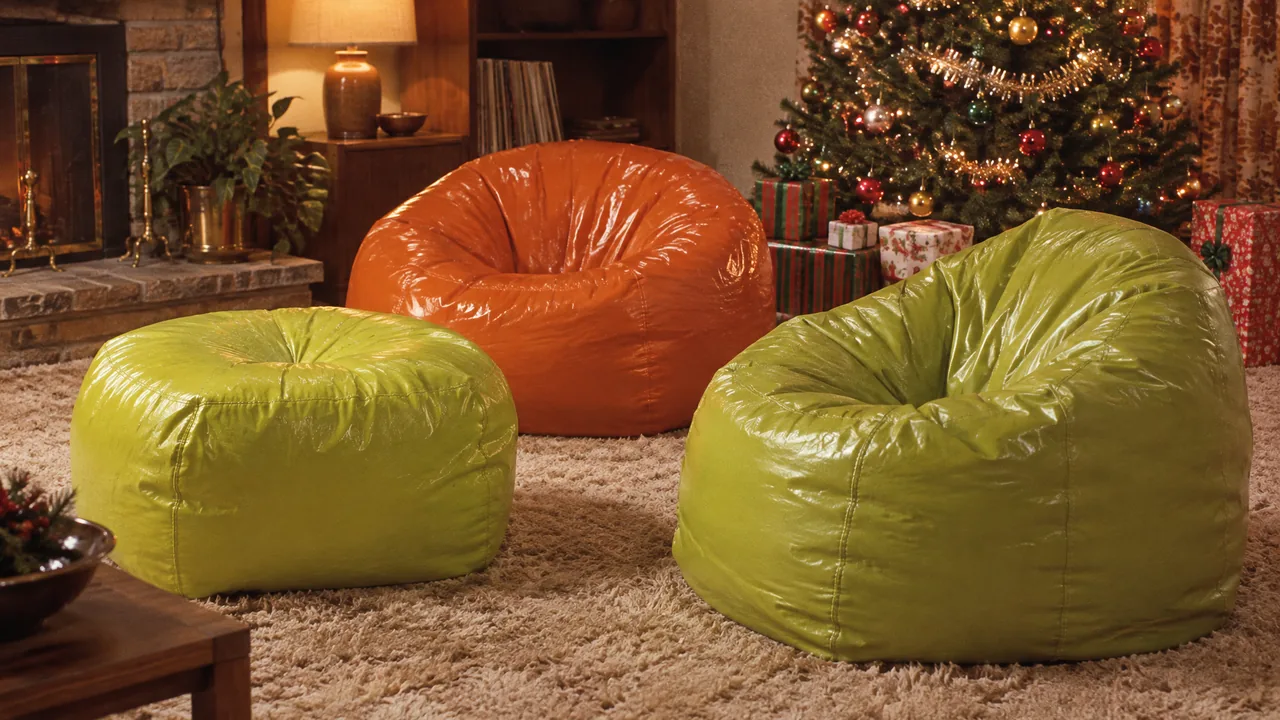
Wards’ 1975 Christmas catalog sold a shiny wet-look vinyl bean bag, filled with polystyrene beans, for $19.99, in nine colors including avocado, lime and orange; a box of refill beans was $3.99. The bean bag has a design-museum pedigree. Three Italian designers, Piero Gatti, Cesare Paolini and Franco Teodoro, created the Sacco in 1968, New York’s Museum of Modern Art owns one, and Zanotta still makes it.
Shower Massage by Water Pik, Penney’s (#15)
A shower spray that pulsed, from 800 to 9,000 times a minute. Penney’s 1976 Christmas catalog had the hand-held Shower Massage by Water Pik for $26.88 (regular $34.99) and tied it to the Water Pik for your teeth. An engineer and a dentist founded Water Pik in Fort Collins, Colorado, in 1962, and it introduced the Original Shower Massage in 1974, a company history says. Waterpik still sells a PowerSpray+ Original Shower Massage.
Motorized mirror ball, Sears (#14)
A disco ball for your own home. By 1979, Sears sold motorized mirror balls: the 10-inch ball with real glass mirror tiles was $59.99, and its motor ran on two D batteries. A 55,000-candlepower spotlight to light it up was $39.99. In 2016, NBC News reported that mirror balls had hung over the sets of Soul Train and Saturday Night Fever, and found a Louisville company, Omega National Products, still making them by hand.
Lava lamp, Sears (#11)
Sears’ 1975 Wish Book described its lava lamps as moving sculptures of rising and falling shapes; the contemporary style was $26.99. Edward Craven Walker began selling his Astro Lamp in Europe in 1963. In America, Lava Lite lamps came from Lava-Simplex Internationale of Chicago, introduced in 1965 at about $25, the Illinois State Museum says. The craze cooled by the late 1970s, according to Smithsonian magazine, and the LAVA brand still sells the lamps today.
The catalogs weren’t the only place: see what the Kmart ads offered in our 1970s Kmart Christmas list, from the Big Wheel to the store’s own color TV.
5. Cameras, gadgets and TV games
Kodak EK6 instant camera, Penney’s (#26)
Press the button, and an electric motor pushed the picture out. Penney’s 1976 Christmas catalog had the Kodak EK6 Instant Camera Outfit, with film, flash, an album and a case, for $79.99; the hand-cranked EK4 outfit was $64.99. Kodak entered instant photography in April 1976, and Polaroid sued within days. Kodak lost the case in 1985 and was out of instant photography the following year. Owners of its instant cameras were offered compensation, and many mailed in the nameplate from the front of the camera as proof of purchase. In 1991, Kodak paid Polaroid $925 million to settle.
Magnavox Odyssey, Wards (#18)
The picture was just a few white blocks and a line, so Magnavox shipped colored plastic overlays to stick on the TV screen. Wards’ 1975 Christmas catalog had the Odyssey for $99.99, with 12 screens, and said it hooked up to any 18- to 25-inch color or black-and-white TV. Engineer Ralph Baer began exploring the idea in 1966, and Magnavox released it in 1972. Many shoppers thought it worked only on Magnavox sets, the Smithsonian says, but the museum credits it with starting the video game console industry. Baer later invented Simon, the flashing memory game.
Pocket Secretary calculator, Sears (#16)
Sears’ 1975 Pocket Secretary was a five-function, eight-digit calculator with memory, tucked in a vinyl wallet with a pen, a note pad and a credit-card holder, for $38.95. Sears said it would fit in an inside coat pocket or a lady’s purse. The calculator inside was a Novus, and prices were falling fast: the Smithsonian traced a Novus 850 from $25.88 in the fall of 1974 to $4.99 by April 1977.
LED watch, Penney’s (#10)
This was the watch you had to press to read. Penney’s 1976 Christmas catalog had Texas Instruments LED watches for $19.95 each. One press of the button showed the hours and minutes, a second the month and date, and a third the seconds. Each press drained the battery, MIT Technology Review explains, while LCD watches could be read without pressing. Four years earlier, Hamilton’s Pulsar, the first LED digital watch according to a Smithsonian curator, had sold for $2,100. By 1979, Sears’ Phasar watches had LCD displays that stayed on. In 2020, Hamilton brought the look back with its PSR.
Sears Video Arcade, Sears (#9)
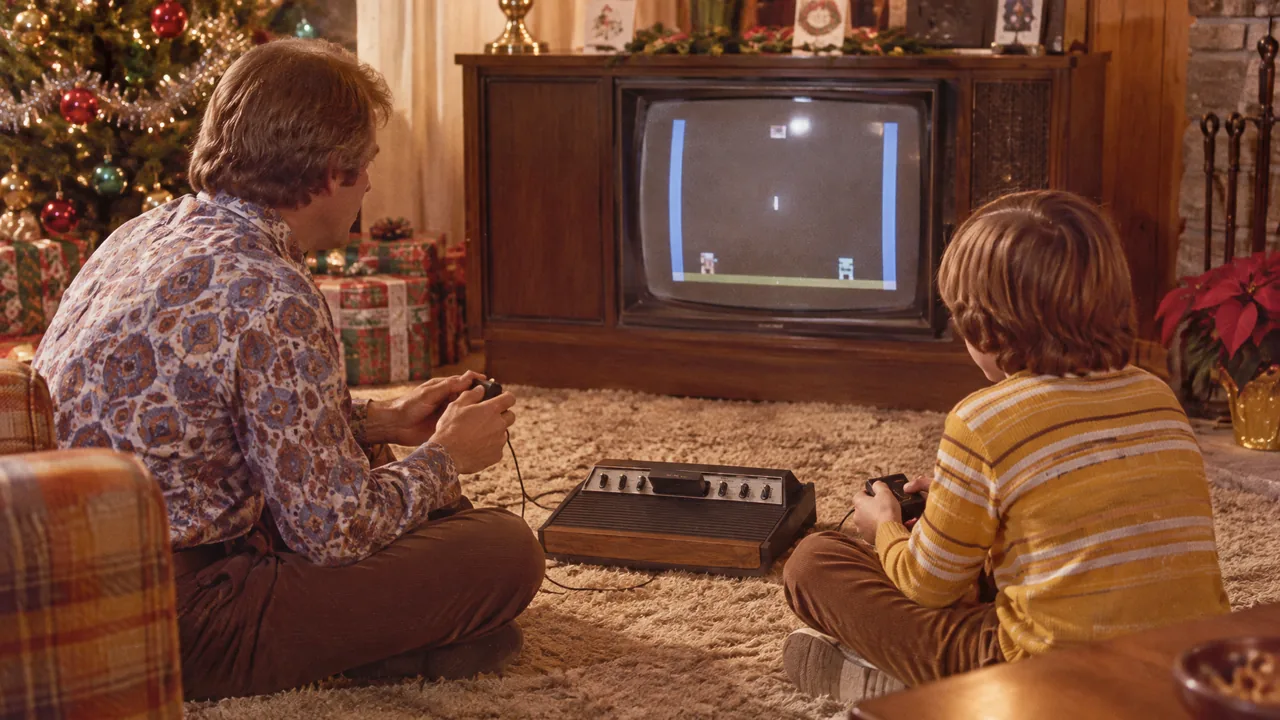
Sears’ 1977 Wish Book opened its games section with the Sears Video Arcade, $178.95. You changed games with a cartridge, the page explained, the way you would put a tape in a cassette player, and the Target Fun cartridge that came with it held 27 games. Under the Sears name, this was Atari’s Video Computer System, launched in October 1977 and better known as the Atari 2600. It struggled at first, The Strong museum says; then, according to the Centre for Computing History, a home version of Space Invaders lifted it to new heights in the early 1980s. It entered the National Toy Hall of Fame in 2007, and Atari sells an updated 2600+ that plays most of the old cartridges.
23-channel CB radio, Sears (#8)
To talk on Sears’ own 23-channel CB transceiver, $99.50 in 1975, the page told you that you needed an FCC license: you had to be over 18 and pay a $4 fee, with no exam. By 1976, C.W. McCall’s “Convoy” had reached No. 1 on the Billboard chart, and First Lady Betty Ford used the CB handle First Mama on the campaign trail. In 1977, the FCC raised CB to 40 channels, and a 23-channel radio could no longer reach them all. Today no individual license is needed, and CB still has 40 channels, the FCC says.
Polaroid SX-70, Sears (#4)
Edwin Land’s SX-70 was released just before Christmas 1972, and Life magazine ran a cover story on it, Smithsonian magazine says. By 1975, Sears had the folding SX-70 Model 3 for $89.50. The picture developed in six minutes, with no pulling or peeling, and Sears said the camera never needed batteries, because a battery came in each film pack. Polaroid stopped making instant film in 2008, and fans saved the last factory, in the Netherlands, Polaroid says. Polaroid sells new SX-70 film today, battery and all.
Tele-Games Pong, Sears (#2)
Pong had been an arcade game since 1972. In the 1975 Wish Book, Sears brought it home under its own Tele-Games name, “designed for Sears by Atari,” for $98.95. The page said it ran on four D batteries with any black-and-white or color TV, flashed the score on the screen and beeped at every hit. Sears’ first order was for 200,000 units, a challenge for Atari to fill in time for Christmas, the Computer History Museum says. The Strong National Museum of Play says Sears had exclusive rights to sell it for the 1975 holiday season, and that a full-page Wish Book ad and a price under $100 helped make it the hottest toy of that season.
Common questions
What were popular Christmas gifts in the 1970s?
The big Christmas catalogs of the decade sold fragrances and gift sets (Brut, Jovan Musk, Wind Song, Canoe), small appliances, hair dryers and hot rollers, cameras, calculators, digital watches, CB radios and TV games. Some left sales figures behind: Crock-Pot sales reached $93 million in 1975, sales of all kinds of popcorn poppers rose from 3.1 million units in 1978 to 6.7 million in 1979, by industry estimates the Boston Phoenix reported, and The Strong museum calls home Pong the hottest toy of the 1975 holiday season. For the toys kids circled, see our pages on Sears Wish Book toys and 1960s Christmas toys.
Is Brut still sold?
Yes. In the United States, Brut’s own website, run by Sodalis USA, sells Brut after shave, splash-on and deodorant, and calls Brut a trusted icon since 1964 (checked November 2026). The brand has changed hands since the Jet Set: Unilever bought Fabergé in 1989, Helen of Troy bought Brut for the Americas from Unilever in 2003, and in 2021 Helen of Troy sold its North American personal care business, Brut included, to HRB Brands.
Who made the Sears Tele-Games Pong?
Atari. Sears’ 1975 Wish Book said the game was designed for Sears by Atari, and Sears distributed the home version from late 1975, according to the Smithsonian. Two years later, Sears sold Atari’s Video Computer System, the console better known as the Atari 2600, as the Sears Video Arcade.
Which one did your family unwrap, and which store’s catalog did it come from? Tell us in the comments on the video.
Keep the memories going
- 1970s Kmart Christmas: 40 things from Kmart’s Christmas ads
- 1960s Christmas food gifts: 40 from the big stores and mail-order houses
- 1950s Christmas gifts: 40 from Sears and Wards Christmas catalogs
- 1960s Christmas gifts: 40 from the big stores and catalogs
- Sears prices in the 1970s: a $9.99 skateboard in today’s dollars
- 1970s party snacks and homemade treats: 38 we want back
- Sears Wish Book toys: Christmas favorites kids circled
Sources and further reading
Catalogs, magazines and newspaper pages were read at the Internet Archive.
- Catalogs: Sears Christmas Wish Books of 1970, 1971, 1972, 1975, 1977 and 1979; Penney’s Christmas catalogs of 1970 and 1976; Montgomery Ward Christmas catalog, 1975; Spiegel Christmas catalogs of 1972 and 1976
- Period magazines and newspapers: House & Garden, Nov. 1968 (Dazey); American Home, Oct. 1968 (Armstrong); American Home, April 1970 (Presto); Pocono Record, Nov. 14, 1968; Orinda Sun, Dec. 13, 1963 (Jade East); Sponsor, Nov. 1964; Roselle Register, Jan. 26, 1970; The Elba Clipper, July 29, 1971; Record-Herald, Washington Court House, Ohio, Dec. 13, 1976; Chesebrough-Pond’s annual reports, 1976 and 1977; Broadcasting, Jan. 3, 1977; Advertising Age, Feb. 25, 1980; The Boston Phoenix, March 10, 1981; Holbrook Press textbook, 1976 (Wind Song); Conair ad, Aug. 1974
- Time: backgammon, Feb. 19, 1973; People, June 16, 1975; CB channels, Aug. 9, 1976; Jovan, June 29, 1981. Sports Illustrated, June 28, 1976 (Brut); Sports Illustrated, May 1964 (reprint, Obolensky); The Washington Post, Dec. 7, 1981; New York Times News Service via Deseret News, July 2, 1996; The New York Times: The Times of the Seventies (2013)
- Museums and government: Smithsonian: Magnavox Odyssey; Smithsonian: Ralph Baer; Smithsonian: Canoe display bottle; Smithsonian: Novus 850; Smithsonian: Tele-Games Super Pong; Smithsonian Insider, April 24, 2015; Smithsonian magazine: Ralph Baer; Smithsonian magazine: the Polaroid; Smithsonian magazine: the lava lamp; Cooper Hewitt: Cifra 3 clock; Art Institute of Chicago: Cifra 3; MoMA: Sacco; The Museum at FIT: leisure suit; Illinois State Museum: Lava Lite; The Strong: early home video game history; National Toy Hall of Fame: Atari 2600; Computer History Museum, Nov. 30, 2022; Centre for Computing History: Atari VCS; Gerald R. Ford Presidential Library: First Mama; Museum of Broadcast Communications: CB radio; NIST: smoke alarm adoption; FCC: CB service; CDC: cigarette smoking among adults; American Cancer Society: Great American Smokeout; FTC v. Colgate-Palmolive, 380 U.S. 374 (1965); Kodak petition, U.S. Supreme Court records; Congressional Research Service, Sept. 16, 2020; Toronto Metropolitan University Library, Aug. 14, 2013
- Histories and reference: Jason Petrulis, Enterprise & Society; Encyclopedia of Cleveland History: Vincent Marotta; NPR via GBH, Dec. 16, 2016 (Mr. Coffee); NPR via NHPR, Sept. 22, 2021 (Crock-Pot); Encyclopedia.com: Rival; Encyclopedia.com: Conair; Encyclopedia.com: Water Pik; Encyclopedia.com: La-Z-Boy; Encyclopedia.com: leisure suits; Encyclopedia.com: CB radio; Dannon company history; IEEE Spectrum, Sept. 30, 2016; IEEE Spectrum, May 2, 2016; MIT Technology Review, Feb. 22, 2011; Stereophile, May 7, 2024; NBC News, July 7, 2016; Lemelson-MIT: Edward Craven Walker; Molson Coors: Coors history; AFI Catalog: Smokey and the Bandit; AFI Catalog: A Touch of Class; Fabergé: timeline; Helen of Troy, SEC filing, 2003; Helen of Troy, SEC filing, 2021; Dana: Canoe; Swatch Group: Hamilton PSR, 2020
- Sold today (checked November 2026): Newell Brands (Crock-Pot, Mr. Coffee); Coty: Jovan; Brut (Sodalis USA); LAVA; Waterpik: Original Shower Massage; Zanotta: Sacco; Polaroid: SX-70 film; Polaroid: about; Atari 2600+; Solari: Cifra 3; Presto: hot-air popper; Conair: facial sauna; Wella Company: Clairol; Dana Classic Fragrances; Kroger: Seal-a-Meal; Macy’s: yogurt maker; Lowe’s: KitchenAid compactor; Living Spaces: La-Z-Boy Wallaway
Historical details checked November 12, 2026.